Anúncios
Learning can feel like a chore, but it need not be. Using light-hearted games and small exercises turns study into a fun, repeatable process that helps children and adults retain more.
Research since the 1990s shows the brain stays adaptable across life. When people engage with information in a game-like way, multiple brain areas fire together.
That combined activation makes it easier to store facts and skills. The learning mind is responsive to the right kinds of challenge, whether for a child at school or an adult on the job.
By taking small steps and keeping engagement high, you reduce stress and boost creativity. This approach builds flexibility and long-term gains in skill, confidence, and the ability to use things learned at different times and in other parts of life.
Understanding the Science of Playful Learning
Modern labs show that game-like learning sparks several key brain regions at once. That activation helps information move from short-term hold into longer storage.
Anúncios
Neuroscience of Play
Imaging finds the prefrontal cortex, hippocampus, and amygdala all light up during active tasks. These areas are critical for forming durable recall and for emotional tagging.
The Role of Dopamine
The reward system releases dopamine when learning feels like a game. That signal tells the brain this material is worth saving.
Graham Fitch, a noted pianist and educator, argues that moving away from mindless drudgery is vital for true skill development.
- Richards (2003) found visual cues, like a sun for the First Amendment, help students categorize facts.
- Teachers report that curious children develop complex cognitive skills faster when they are active in class.
- Simple tools—cards, short games, or a hand signal—give students a clear process to follow.
“When people enjoy the process, attention and recall improve,”
How a Memory Playful Strategy Enhances Retention
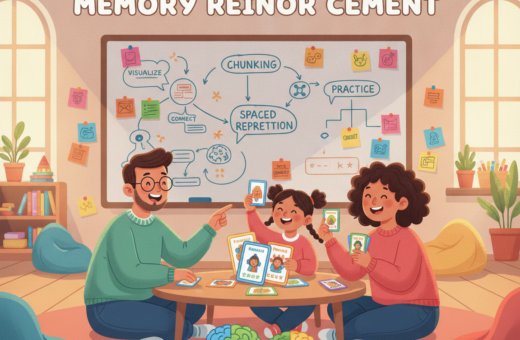
Turning study tasks into brief games helps learners spot clear patterns in new content. This shift gives the brain a simple way to reorganize information so recall becomes easier over time.
Research supports this approach. Visual organizers and short, varied drills let children and adults group facts into meaningful chunks.
Graham Fitch observed that students who use varied practice often retain complex pieces better. Teachers report similar gains when students teach a peer. That act of explaining makes ideas more durable.
- Reorders facts into clear patterns.
- Builds neural links through repeated, enjoyable practice.
- Uses simple tools like cards or organizers in class.
“When learners turn study into a small game, attention and recall improve,”
For classroom or home work, try short rounds that mix review with explanation. Over time, students pick up skills faster and keep them longer.
Activating Your Learning Mind Through Novelty
A fresh twist or surprise in a lesson often wakes up the learning mind and makes new facts stick. Novelty breaks routine and signals the brain that this information matters.
Embracing Curiosity
Encourage a Sherlock Holmes approach to practice. Graham Fitch’s research shows that treating a piece of music or a problem like a puzzle keeps sessions lively and avoids stale repetition.
When children meet surprises, they try new ways of thinking. That exploration builds useful skills and supports long-term development.
- The learning mind thrives on novelty; small games added over time boost cognitive development.
- Curiosity helps a child and adults reorganize facts into usable chunks.
- Treating study as a short game keeps attention high and makes complex things easier to use later.
“Novelty acts as a trigger for the brain, ensuring information is accessible when needed.”
Visualizing Concepts for Better Recall
Mapping concepts visually helps students spot links that plain lists often hide. Visual tools turn facts into patterns, which makes recall easier and more reliable for both a child and adult learner.
Mental Movie Making
Ask students to imagine a short scene that shows a fact in action. This technique works because the brain processes images far faster than text.
Richards (2003) used mnemonics like RAPS as an example of a compact mental film that aids recall. That research shows people remember better when they attach a vivid image to a concept.
Using Visual Organizers
Teachers can introduce simple organizers such as Venn diagrams to compare volcanoes and revolutions. These diagrams help children group ideas and build inferential comprehension.
- Venn diagrams reveal shared and unique traits between topics.
- Hand-drawn cards or icons let a student create a tactile visual sense of material.
- Quick sketches save time and become a lasting part of the study process.
“Visual organizers make complex ideas manageable and easier to retrieve.”
Using Movement to Anchor Information
Adding simple gestures or short walks to a lesson helps facts stick in the body as well as the head. Movement mapping—walking in patterns or using a hand sign—anchors new information so recall feels natural during tests or shows.
Graham Fitch found that miming and shadow practice build coordination and a reliable recall under pressure. That technique helps students who perform, like musicians, keep details intact.
Richards (2001) recommended physical cards and movement-based organizers for students who struggle with lists and symbols. A child can place a card on a step, move to the next, and repeat a sequence. Over time, the brain ties the concept to the path.
- Use short routes or hand gestures to mark each step in a process.
- Let a student act out a sequence while saying key words aloud.
- Mix cards and motion so the body and brain form multiple recall pathways.
“Integrating action into learning creates more ways to access what you know.”
The Power of Storytelling in Memory
Turning facts into characters and events makes them more likely to last over time.
Storytelling gives the mind a simple path through complex material. By placing facts inside a scene, the brain finds clear patterns it can follow.
Creating Narrative Chains
Start by naming a character for each key idea. Give that character a goal and a small obstacle to overcome.
Link events so one leads to the next in order. This turns a list of facts into a short tale that moves through time.
- Make each fact a vivid action or trait.
- Use emotion or surprise to mark important points.
- Repeat the tale aloud to strengthen the chain.
- Swap roles with a partner to test recall.
- Turn abstract things into familiar scenes.
Graham Fitch stresses that adding character and a narrative voice helps information stick better than rote repetition.
“When you make ideas part of a story, they become easier to find later,”
Gamifying Your Study Sessions
Turn routine review into a short contest and watch focus sharpen. Using apps like Kahoot puts a friendly twist on learning and helps students zero in on key facts.
Set a 20-minute timer, as Graham Fitch suggests, to keep a student’s work tight and lively. This time-boxed approach is a simple way to keep practice efficient and fun.
Structure tasks like video game levels. Break content into small steps, add points, and let learners move up a level after a short win. That way they stay in flow without feeling overwhelmed.
- Use flashcards and apps so students actively play with facts.
- Try competitive quizzing in class to turn review into a lively example of learning by doing.
- Mix solo rounds and team rounds so each student gets a number of quick wins.
“Friendly contests and clear goals make practice feel meaningful.”
Teaching Others to Solidify Knowledge
When learners teach a peer, they must turn scattered facts into simple, linked patterns. This act pushes a student to explain ideas clearly and to spot gaps in understanding.
The teach-back method asks students to say the steps aloud, reorder ideas, and show how key points connect. Graham Fitch used this with teachers and students to make musical concepts easier to explain before moving on.
Teachers who use peer teaching report that students gain deeper understanding. Explaining information forces selection and sequencing. That builds strong mental patterns that last beyond the lesson.
- The teach-back method makes a student reorganize facts into clear patterns.
- Graham Fitch often works with teachers and students to sharpen explanations.
- Teaching others exposes gaps, which helps solidify what you know.
“Explaining a topic aloud reveals what you truly understand and what needs work.”
For practical tips to align this with classroom practice, see align teaching with brain science.
Incorporating Music and Auditory Cues
A simple melody can act like a mental glue that ties facts together in order.
Graham Fitch uses singing to help students shape intervals and sharpen auditory recall. His approach shows how short vocal lines make abstract items easier to hold in the mind.
Research supports this. Rhythm and melody help the brain anchor information, so review becomes less tedious and more effective over time.
Practical ways to add music to study:
- Sing a short tune for a list of facts so the order sticks.
- Use a steady pulse to mark steps when practicing a process.
- Listen to a brief pattern before recall times to cue focus.
Leon Fleisher taught that rhythm is primary; use musical shape to guide expression, not just a metronome. Simple auditory cues—humming a line, tapping a beat, or repeating a motif—offer a reliable number of paths to recall.
“Using sound to tag ideas makes them easier to find later.”
Managing Stress to Keep the Mind Receptive
Stress puts the brain on guard and shuts down the pathways that help us grow. When the body senses threat, it limits the formation of new connections. That makes learning less effective.
Graham Fitch notes that performing under pressure requires mental skills that calm the mind and keep it open to new information. Quieting inner chatter helps the brain accept new input during both study and work.
Research also shows high stress can inhibit recall and block development of durable pathways. Creating a calm environment is a simple, powerful step toward better learning.
- Lower arousal: short breaks, deep breaths, and predictable routines reduce stress.
- Short rituals: a warmup or clear goal helps the mind shift into a receptive state.
- Supportive setting: soft light, quiet, and brief movement ease tension and aid development.
“By managing stress, you ensure the brain remains a receptive vessel for the information you want to master.”
Building Consistency with Reward Rituals
Small reward rituals turn study checkpoints into moments you look forward to. A quick victory dance, a short break with a favorite snack, or a five-minute treat signals the brain that work leads to joy.
These tiny rewards train the mind to anticipate milestones and keep information practice steady over time. Graham Fitch notes that adding variety and a sense of play makes the process stick and keeps motivation fresh.
By celebrating small wins you make learning part of daily life. That reduces burnout and helps facts move into long-term memory without pressure.
“Reward rituals act like a simple game: they link effort to positive outcomes.”
- Create short rituals (dance, snack, song) after a mini-task.
- Rotate rewards so things stay interesting and avoid stale repetition.
- Use rewards to mark progress and maintain consistent practice over time.
For more ideas on keeping adults engaged with varied tasks, see cognitive activities for adults.
Adapting Techniques for Different Learning Styles
When teachers offer options—visual cards, movement, or a short verbal cue—students can choose what helps them most.
Match methods to the learner: some children prefer a hand-held card or a quick sketch. Others need a short walk or a gesture to lock in a skill.
Graham Fitch works with people from young students to seasoned pros to find the best learning approaches. Richards (2003) gives clear evidence that categorizing information helps students understand faster.
Teachers who add a few steps, multiple examples, and a mix of tools in class give each child a sense of success. Variety in the process builds cognitive flexibility over time.
- Use visual cards and labels to group facts.
- Let a student act the steps with a hand motion.
- Offer brief choices so students select what fits their sense of ease.
“Adapting practice to the learner makes skills more durable and learning more inclusive.”
Conclusion
When practice is built around clear steps and small wins, retention improves steadily. Embrace a few simple, repeatable moves—storytelling, short movement breaks, and tiny reward rituals—to make learning feel like a game and part of daily life.
These approaches help your mind stay engaged, boost creativity, and keep cognitive flexibility strong. The goal is steady engagement, not perfection. Over time, small actions add up into lasting memory.
Shift away from rote drills and adopt a lighter, more playful method. This single change can transform study into a habit you enjoy and sustain. Use this concise strategy to keep learning practical and joyful.