
Anúncios
Você já se perguntou por que seu celular parece mais ativo do que sua caixa de entrada de e-mails? A mudança que está por baixo dos panos é impressionante: os canais móveis estão crescendo rapidamente e as pessoas estão interagindo de maneiras que alteram o planejamento de marketing.
As mensagens no aplicativo agora atingem uma taxa de cliques (CTR) de aproximadamente 22%.O volume de mensagens no canal móvel aumentou 1941 mil dólares em relação ao ano anterior, e o SMS alcança bilhões de pessoas com uma taxa de abertura de 981 mil dólares. Esses dados comprovam que sua estratégia de comunicação é mais importante do que nunca.
Você verá por que as campanhas multicanal superam em muito os esforços de canal único e por que os dados primários e uma estratégia clara são essenciais para conquistar a confiança. Marcas como a Alo Yoga chegam a contabilizar o SMS como receita mensurável.
Continue a leitura para obter uma visão clara dessas tendências, os dados que as sustentam e uma perspectiva prática sobre para onde seu marketing e comunicação devem se direcionar daqui para frente.
Por que sua mensagem está mudando agora?
Os telefones agora moldam a forma como os clientes esperam receber comunicações das marcas.E essa mudança altera o que chama a atenção.
Anúncios
HojeAs mensagens enviadas por canais móveis (no aplicativo, notificações push e SMS) aumentaram 194 mil em 2024, e a taxa de cliques (CTR) no aplicativo atingiu 22 mil — quase 12 vezes maior que a do e-mail. Adultos nos EUA checam seus celulares cerca de 114 vezes por dia e 68 mil usam dispositivos móveis para e-mails pessoais ou profissionais. Esses dados mostram que sua comunicação precisa alcançar as pessoas onde elas estão.
Você está presenciando mudanças mais rápidas porque os clientes vivem conectados aos seus celulares e esperam interações instantâneas e fluidas. A capacidade de atenção está cada vez menor; sua abordagem precisa oferecer utilidade clara em segundos para manter o engajamento em alta.
- Você compete no espaço de aplicativos e notificações, não apenas em caixas de entrada lotadas.
- Sessenta e nove por cento dos consumidores preferem enviar mensagens de texto para as marcas em vez de fazer ligações.
- Operacionalmente, você está migrando de envios em lote para gatilhos em tempo real que exigem melhores dados e orquestração.
Na práticaIsso significa configuração mais rápida, testes mais rápidos e operações mais eficientes. Quando você respeita o contexto e o tempo, os clientes respondem — e seus resultados acompanham.
O que “novos comportamentos de mensagens” realmente significam para você?
Os clientes esperam respostas rápidas em seus telefones, e isso muda a forma como você planeja suas estratégias de contato.
Intenção do usuário hoje: instantânea, em tempo real, prioritariamente em dispositivos móveis
Seu público age no momento. Adultos nos EUA verificam seus telefones cerca de 114 vezes por dia, e a intenção do usuário é inerentemente... tempo realVocê deve criar instruções curtas que levem a resultados imediatos.
De mensagens unidirecionais a conversas bidirecionais
Sessenta e nove por cento dos consumidores preferem se comunicar com as marcas por mensagens de texto. O SMS atinge aproximadamente 5 bilhões de pessoas hoje e esse número deve crescer para 5,9 bilhões em 2025. Isso faz com que respostas e confirmações rápidas sejam etapas naturais.
- Você constrói melhor relacionamentos quando os clientes escolhem os canais e a frequência.
- Adicione microinterações — respostas rápidas, toques e pequenas pesquisas — para reduzir o atrito.
- Reformule o sucesso em torno da velocidade de resolução e da qualidade da conversa, e não apenas dos envios.
A confiança e a atenção migram para os canais nativos nos celulares.
Combinações multicanal (push + SMS) convertem em torno de 15%, e a CTR no aplicativo é de 22%. Foque em anúncios nativos. canais Onde a confiança e a atenção são mais elevadas. Pequenos toques contextuais guiam o cliente por etapas úteis e mantêm o nível geral de engajamento. experiência coerente.
O envio de mensagens dentro do aplicativo se consolida como um canal de alta intenção de compra.
Sessões com alta intenção de compra fazem das mensagens dentro do aplicativo um dos caminhos mais claros para um engajamento rápido.
Evidências de crescimentoO número de contas que enviam mensagens dentro do aplicativo aumentou 741 mil de 2023 para 2024, e o volume de envios dentro do aplicativo saltou 5,4 vezes em relação ao ano anterior. Os canais móveis em geral registraram um aumento de 194 mil envios em 2024. Essa escala explica por que o desempenho dentro do aplicativo agora tem uma taxa de cliques (CTR) média de 221 mil — cerca de 11,8 vezes maior do que o e-mail.
Quando usar o aplicativo, notificações push ou e-mail para engajamento
Use notificações no aplicativo quando os usuários estiverem ativos no seu produto e você poderá personalizar os avisos de acordo com o contexto atual. Combine notificações push com notificações no aplicativo para trazer as pessoas de volta e, em seguida, confirme as ações quando elas estiverem dentro do aplicativo.
- Baseie-se em dados: As campanhas dentro do aplicativo apresentam taxas de sucesso excepcionais porque a intenção da sessão é clara.
- Misturar canais: A conversão média de mensagens push e SMS é de aproximadamente 15%; combinações de 3 e 4 canais geram resultados 3 e 3,7 vezes melhores do que envios de canal único.
- Meça além dos cliques: Acompanhar a conclusão das ações da sessão, a adoção de recursos e a retenção.
Use o e-mail para adicionar detalhes e informações educativas, mantendo o aplicativo para lembretes imediatos. Uniformize a comunicação em todos os canais para que os usuários saibam que o próximo passo é seguro e óbvio.
Omnicanalidade, não "ou um ou outro": como os canais se amplificam mutuamente.
Quando os canais trabalham juntos, cada ponto de contato potencializa o seguinte e seus resultados se multiplicam. Setenta e seis por cento das marcas relatam que campanhas multicanal são essenciais. O uso de dois ou mais canais tem um desempenho cerca de 60% melhor do que o envio por um único canal.
Combinações vencedoras Combine alertas rápidos com confirmações mais detalhadas. A combinação de notificações push e SMS captura a intenção rapidamente — os melhores desempenhos relatam uma taxa de conversão de aproximadamente 151 TP/3T. Em seguida, use o aplicativo ou o e-mail para confirmar, explicar e incentivar a ação final.
Como planejar combinações de alto impacto
Desenvolva campanhas onde cada canal tenha um papel distinto. Sequencie mensagens com objetivos claros: alertar, auxiliar, confirmar. Isso reduz a carga cognitiva e aumenta a produtividade. engajamento do cliente.
- Priorize a coerência da jornada para que cada interação contribua para um único resultado.
- Personalize as opções de canais por segmento e permita que os clientes optem por combinações.
- Monitore as combinações e realoque o orçamento para as mixagens que tiverem melhor desempenho — combinações de 3 canais podem ter um desempenho cerca de 3 vezes melhor; conjuntos de 4 canais alcançam resultados cerca de 3,7 vezes superiores aos de um único canal.
Para obter orientações práticas, explore um estudo aprofundado sobre mensagens omnicanalMantenha os limites de frequência alinhados em todos os canais para proteger a confiança e simplificar a comunicação, eliminando interações duplicadas.
O SMS evolui: eficácia, casos de uso e o ciclo de vida de 10 dias nos EUA.
As mensagens SMS ainda se destacam em meio ao ruído porque chegam a todos os telefones e são abertas quase instantaneamente.
Rápido e nativoAs mensagens de texto são entregues em minutos e atingem uma taxa de abertura de aproximadamente 98,1 milhões. Elas não precisam de aplicativo nem de Wi-Fi, então você pode contar com elas para contatos urgentes. Cerca de 69,1 milhões de pessoas preferem mensagens de texto a ligações, e aproximadamente 5 bilhões de usuários acessam SMS no mundo todo.
Quando usar SMS para ações e serviços
Use SMS curtos para alertas urgentes: autenticação de dois fatores (2FA), lembretes de compromissos ou pagamentos, atualizações de pedidos e avisos de entrega. Adicione ofertas relâmpago concisas, alertas de reposição de estoque, lembretes de carrinho abandonado e solicitações de avaliação à sua estratégia de marketing.
10DLC e envio em escala
10DLC é o padrão americano para SMS comercial. É mais barato que códigos curtos e ajuda as operadoras a identificar remetentes confiáveis e bloquear spam. Durante a pandemia, cerca de 1,3 milhão de empresas a mais adotaram o SMS A2P — mostrando como muitas organizações migraram para o envio de mensagens de texto em larga escala e em conformidade com as normas.
- Conte com rapidez e alcance quase universal para mensagens urgentes.
- Crie chamadas para ação (CTAs) claras, opções de cancelamento de inscrição e links otimizados para dispositivos móveis.
- Adote o modelo 10DLC para escalar, protegendo a capacidade de entrega e a confiabilidade.
O RCS entra no chat: mensagens ricas e interativas se tornam comuns.
O RCS adiciona uma camada mais rica e semelhante à de um aplicativo às conversas de texto, permitindo que você crie fluxos de trabalho que se desenrolam dentro de um chat.
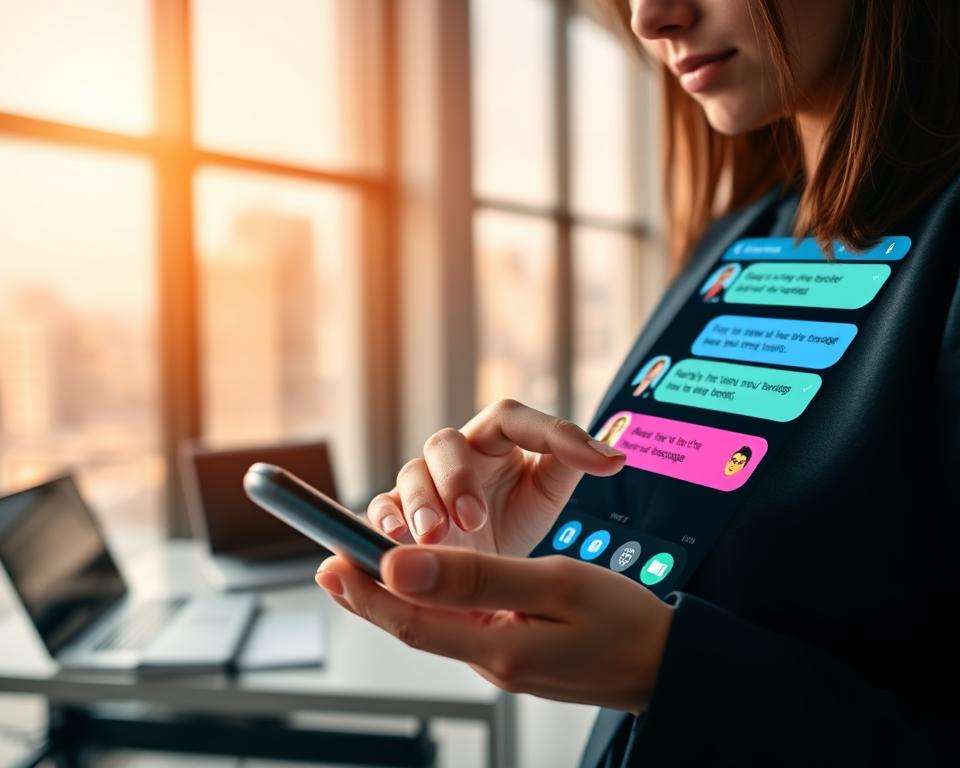
O RCS suporta mídia de alta resolução, carrosséis, botões interativos e atualizações em tempo real. Isso permite enviar mensagens mais ricas com conteúdo que orienta as escolhas e reduz as etapas até a conversão.
O mercado apresenta um crescimento acelerado: analistas projetam que o RCS (Retail Consumer Services) se expandirá de 1,21 bilhão de dólares em 2021 para 5,53 bilhões de dólares em 2027, e a adoção pela Apple está acelerando a experimentação de marcas.
A adoção da Apple acelera a experimentação da marca.
Comece com jornadas de alto valor. Teste navegação guiada, reservas ou seleção de produtos dentro da conversa. Recorra ao SMS quando o RCS não for compatível para manter o alcance a todos os consumidores.
- Alinhar o conteúdo aos resultados: Os botões devem encurtar o caminho para a compra ou o suporte.
- Usar remetente verificado: Construa confiança e destaque-se do spam em um mundo onde o celular é prioridade.
- Medir e dimensionar: Compare a qualidade de conversão e a profundidade da sessão com SMS, notificações push e e-mail.
À medida que a adoção do RCS cresce, você aprimorará a criatividade, controlará os custos por meio de projetos-piloto e manterá seu planejamento de marketing atualizado para o futuro.
Automação e IA: de alertas oportunos a assistentes conversacionais
A automação e a IA permitem transformar sinais em tempo real em momentos úteis para o cliente, que podem ser escalados. Use a automação para reduzir o trabalho manual e tornar cada interação mais inteligente.
Gotejamento, fluxos acionados por comportamento e respostas em tempo real.
Resultados rápidos: A automação vincula eventos a ações. Os dados mostram que a automação pode aumentar a produtividade de vendas em 14,51 TP3T e reduzir os custos de marketing em 12,21 TP3T.
Aproximadamente 311 mil marcas relatam obter o melhor retorno sobre o investimento (ROI) com gatilhos comportamentais que reagem em tempo real. Sessenta e quatro por cento utilizam segmentação e cerca de 351 mil utilizam plataformas de dados do cliente (CDPs) para gerar gatilhos precisos.
Chatbots por SMS e assistentes de IA que escalam o atendimento ao cliente
Suporte de escala: Implante chatbots por SMS para perguntas rotineiras e assistentes de IA para lidar com problemas complexos. Isso libera sua equipe para tarefas que exigem maior interação pessoal.
- Você criará campanhas acionadas por comportamento que são executadas em tempo real — mensagens de boas-vindas, lembretes de ativação e notificações de carrinho.
- Projete fluxos de trabalho adaptáveis que eliminem etapas redundantes e agilizem a obtenção de valor por parte dos usuários.
- Priorize mensagens de texto curtas, opções de resposta claras e alternativas para que as conversas continuem fluindo.
- Combine a supervisão humana com a automação para proteger a qualidade e a empatia.
- Monitore o engajamento — velocidade de resposta, taxas de resolução e CSAT — para refinar as estratégias e calcular o ROI.
Dados e personalização: usando o comportamento para gerar relevância.
Centralizar a identidade e os eventos cria mensagens que correspondem à real intenção do cliente. Aproximadamente 781 mil marcas afirmam que os dados primários são essenciais, mas cerca de um terço delas enfrenta problemas com silos de dados e qualidade. Resolver essa lacuna é o primeiro passo para uma personalização confiável.
Ative uma CDP para unificar identidades, eventos e preferências. Ao centralizar os dados, você pode segmentá-los com mais precisão. Sessenta e quatro por cento das equipes já utilizam segmentação, e aproximadamente 351 mil utilizam uma CDP para eliminar silos de dados.
Personalização que vai além do nome
Vá além dos tokens. Use contexto, tempo e sinais de comportamento em tempo real para acionar próximas etapas úteis — recargas, tutoriais ou complementos — em vez de ofertas genéricas.
- Padronizar definições e corrigir as lacunas de qualidade para que as regras se comportem de forma previsível.
- Utilize objetos personalizados (planos, dispositivos, inventário) para refletir o contexto real do negócio; campanhas que usam objetos personalizados registraram um aumento de 35% na conversão ano a ano em 2024.
- Alinhe as estratégias com a privacidade e dê aos consumidores o controle sobre o uso e a frequência do uso de dados.
Meça o aumento de desempenho comparando a conversão, o valor médio do pedido (AOV) e a retenção com grupos de controle. Documente as regras de decisão e os mecanismos de segurança para que sua personalização seja escalável sem mensagens contraditórias. Isso mantém o engajamento do cliente consistente e mensurável.
Design focado em dispositivos móveis: e-mail otimizado para celulares e experiência do usuário em diversos canais.
Faça com que o e-mail funcione como um complemento aos alertas rápidos do celular, fornecendo detalhes sem interromper o momento. Sessenta e oito por cento das pessoas leem e-mails pessoais ou profissionais em dispositivos móveis, e o envio por dispositivos móveis aumentou 194% em relação ao ano anterior em 2024. Isso significa que seu e-mail precisa funcionar bem com pontos de contato rápidos e prioritários para dispositivos móveis.
E-mail responsivo como parte da sua plataforma mobile.
Projetado para digitalização rápida. Use assuntos curtos, pré-títulos claros e layouts fáceis de usar com o polegar para que os leitores ajam em segundos. Destaque as chamadas para ação (CTAs).
- Mantenha o conteúdo fácil de escanear com títulos claros, parágrafos curtos e ícones grandes que chamam a atenção ao tocar na tela.
- Incorpore blocos modulares para que os modelos se adaptem a diferentes dispositivos e casos de uso.
- Alinhe os sistemas visuais e de texto em todos os canais para que a experiência do usuário permaneça coesa.
- Use avisos no aplicativo ou por SMS para acionar acompanhamentos personalizados por e-mail e confirmar ações.
- Teste o modo escuro, a proeminência dos links e o contraste do CTA em telefones comuns para evitar desconexões silenciosas.
- Meça o impacto subsequente — cliques para conversão e tempo no site — para comprovar o papel do e-mail na jornada do cliente.
A acessibilidade é importante. Adicione estrutura semântica, texto alternativo e contraste adequado para que todos possam ler e interagir. Quando o e-mail oferece suporte a interações rápidas e curtas em dispositivos móveis, seu marketing parece coordenado e útil.
Conformidade e consentimento: antecipando-se às regras mais rigorosas.
A conformidade agora é uma estratégia de entregabilidade: O registro adequado e o consentimento auditável reduzem a filtragem e os bloqueios de suas campanhas.
Opções de adesão, registro e expectativas da operadora que você deve atender.
As transportadoras exigem cadastro. e padrões de adesão mais rigorosos, e a aplicação agora se estende a números gratuitos. Nos EUA, o 10DLC ajuda as operadoras a identificar remetentes confiáveis e bloquear spam, portanto, a configuração adequada melhora a entregabilidade dos seus programas de SMS.
- Você implementará opções de adesão explícitas e auditáveis para todos os envios e manterá divulgações claras no momento da inscrição para evitar problemas.
- Você registrará programas de SMS junto às operadoras (incluindo números gratuitos, quando aplicável) para reduzir problemas de entrega para empresas.
- Você irá padronizar modelos compatíveis com a linguagem necessária (ajuda/parar) para que os clientes gerenciem preferências e mensagens com facilidade.
- Você separará os envios transacionais dos promocionais, respeitará os horários de silêncio e registrará o consentimento, a finalidade e a frequência de cada programa executado pelas empresas.
- Você monitorará as taxas de reclamação, o feedback das operadoras e as listas de bloqueio, além de treinar as equipes para que sua comunicação permaneça em conformidade desde o primeiro dia.
Dica prática: Revise a experiência do usuário (UX) do opt-in e valide os números regularmente para evitar contatos desatualizados que podem acionar filtros e problemas subsequentes.
Conclusão
Suas melhores opções são jornadas curtas e claras que estimulam a ação rápida e rastreiam os resultados com precisão.
Recapitular: A adoção no aplicativo aumentou 74% e a taxa de cliques (CTR) no aplicativo está em 22% (cerca de 11,8 vezes maior que a do e-mail). Os envios para dispositivos móveis cresceram 194% e as campanhas multicanal superaram os esforços de canal único — notificações push + SMS podem alcançar uma taxa de conversão de aproximadamente 15%. O SMS mantém uma taxa de abertura de cerca de 98% e 69% dos clientes preferem mensagens de texto. Baseie sua estratégia em dados primários: 64% use segmentação e 35% use CDPs para personalizar em escala.
Comece com uma ou duas jornadas de alto impacto, teste o RCS e o marketing conversacional onde for apropriado e considere a conformidade como um facilitador do crescimento. Para dicas de design sobre intervenções por SMS, consulte a pesquisa sobre intervenções eficazes por SMS. intervenções por SMS.