Anúncios
You can boost classroom energy and keep students on task with short, reward-based games that respect your schedule. Quick whole-class moves — like Beach Ball Questions or Line “Speed Dating” — make the most of every minute without derailing instruction.
These structures let you run low-stakes checks and gather real-time data while students stay engaged. Team activities such as Cup Stacking and Hula Hoop Fingers build strategy and cooperation.
Low-prep options — from Board Race to Origami — plug easily into any class or subject. You’ll find a clear list organized by when to use each activity: openers, mid-lesson energizers, and quick end-of-class checks.
Use rewards to reinforce effort and collaboration, not just right answers. Small privileges or brief energy wins help kids see effort as valuable and keep people included, so every student has a role.
Why Reward-Based Learning Keeps Energy High and Knowledge Flowing
A few minutes of game-based prompts can lift energy, build belonging, and show you what students really know. Quick, reward-driven moves cut down on routine paper checks and give you instant evidence of recall.
Anúncios
When students enjoy an activity, their focus and retention improve. Retrieval practice in these moments strengthens memory more than a one-off quiz.
Balance matters: order rewards to celebrate effort, strategy, and collaboration instead of only correct answers. That approach nudges risk-taking and makes your class feel safer.
- Use short prompts to replace some paper tasks and boost retrieval.
- Scaffold thinking with sentence starters or visual cues so every student can join.
- Adjust time limits and the order of tasks to match attention spans.
These ways keep planning light while building skills like listening, turn-taking, and self-regulation. You get a quick reset when energy dips and a clear way to align rewards with your goals.
The Science of Play: How Games Boost Belonging, Skills, and Retrieval Practice
Using brief game bursts turns routine recall into a low-stakes habit that protects energy and morale. Whole-class activities avoid elimination, so every person stays engaged and no one feels left out.
Retrieval practice is the engine here: asking quick questions or prompts forces memory retrieval. These attempts strengthen recall more than passive review.
- You frame play as a research-aligned engine for memory by prompting short, frequent recall.
- Use words, images, and shapes—act out terms, sketch diagrams, or sort visuals—to boost multi-sensory retention.
- Design low-stakes turns: think-pair-share before public answers so no one person is singled out.
- Keep tips simple: short time caps, clear roles, and concise rules maintain pace and focus.
Rotate formats to match content: movement for vocabulary, quick sketches for geometry, or rapid-fire prompts for facts. Praise strategies and effort as much as right answers to help students link effort to growth.
For more practical examples and play-based approaches, see play-based approaches you can adapt to your class.
fun learning challenges You Can Run With Any Grade or Subject
You can map topics to quick routines that get every person answering without interrupting your lesson flow. These moves fit a 2–5 minute window, let you collect formative data, and give students a clear, low-pressure role.
Beach Ball Questions for fast recall and formative checks
Pass a beach ball in a simple pattern. When a student catches it, they name an item in a category: elements, Civil Rights leaders, or number sentences adding to 10.
Tip: Add lifelines or sentence stems so every student can answer without stress.
Charades and Act-It-Out to cement vocabulary and concepts
Students mime vocabulary, characters, geometric shapes, or science ideas. Allow a friend to assist for tougher prompts.
This anchors words and shapes in movement so people remember concepts from different angles.
Flip-It Whiteboards and Back-to-Back answers
Have students write on whiteboards or paper, then flip for an instant reveal. Use this for quick math, phonics, or sketches of polygons and angles.
Back-to-Back lets partners compare answers simultaneously, then correct together for fast feedback.
Concentric Circles and Line “Speed Dating” discussions
Rotate inner and outer circles or run a line swap. Short timed prompts broaden peer talk and keep pace tight.
Keep a stack of prompt cards or paper ready so you can run these in different ways with minimal prep.
- Quick mapping: Use categories on the ball or cards so every student participates on time.
- Support: Build in lifelines, visuals, and time caps to give students entry points.
- Low prep: A paper stack of prompts and a few cards is enough to run these games any day.
For more ready-to-use options, see classroom games to make student learning.
Elementary-Friendly Challenges That Make Learning Fun
Simple motion activities let you assess mastery while students move and regroup. These short rounds fit a tight schedule and give quick evidence of skill without long setup.
Stand Up / Sit Down: Sort by sound, shape, or number
Assign one response to standing and another to sitting to practice even/odd, blends, or quick facts. This gives kids instant, movement-based feedback and keeps transitions sharp.
Tip: Change categories each round to layer difficulty from short vowels to blends.
Musical Chairs meet-and-share with cards
Play music; when it stops, students pair up to compare numbers, build words from base+suffix cards, or compute two-digit sums. Use cards to prompt the task and pre-differentiate difficulty.
Keep time tight so the round acts as a mini-energizer and stays classroom-safe.
ABC Hopscotch for phonics and movement
Draw an alphabet hopscotch and have players say the letter and name a word that starts with it. Keep paper-ready slips or picture cues for quick runs any day.
- Quick run: Use short rounds to save time between lesson parts.
- Support: Space pathways, assign simpler numbers or word parts to some kids.
- Close: End with a 30-second reflection where each student names what they practiced.
Middle and High School Twists That Respect Teens’ Time
Use snapshots and rapid debates to get deep thinking from a class in a few focused rounds. These moves let you assess analysis and argument without long prep.
Tableaus and Museum Statues for symbolism and story
Have small groups freeze into a still scene that captures a key moment or theme in a story. One person leads blocking while others craft gestures and cue-card words.
Keep setup tight: cap construction to a minute or two, then rotate for quick viewing and peer feedback.
Kahoot-style verbal debates without devices
Run rapid, device-free quiz rounds where pairs discuss, agree, and justify answers aloud. You’ll vary prompts from literary analysis to data interpretation.
Set strict time windows so every student knows the pace. Close with short exit slips to capture reasoning and guide what to reteach.
- You’ll compress symbolism and analysis into visual snapshots fast.
- You’ll scaffold roles so one person blocks while others refine gestures and words.
- You’ll rotate groups across the room to mix people and perspectives.
- You’ll maintain classroom norms for movement and voice levels to protect focus.
Indoor Group Games That Spark Communication and Strategy
Indoor group games can quickly spark conversation, strategy, and clear roles in a busy classroom.
Use short rounds to practice teamwork, turn-taking, and planning without losing instructional time. These activities work in a small room and scale to suit your students.
Human Knot for trust and problem-solving
Have groups of 5–10 form a circle and grab random hands. The goal is to untangle without letting go.
This builds communication and resilience as students map steps, call moves, and try solutions safely.
Cup Stacking with a rubber band and strings
Teams use a rubber band tied to strings to move and stack cups together. Each person controls a string.
This activity teaches sequencing, patience, and precise timing while emphasizing collaborative building.
Hula Hoop Fingers for precision teamwork
Students place fingertips under a hula hoop and lower it to the floor without grabbing. Try one-hand rules or time limits.
It sharpens micro-coordination and forces clear calls and steady pacing across the team.
- You’ll set small group sizes so every person contributes and time stays tight.
- You’ll assign roles—spotter, caller, mover—to rotate responsibility for each student.
- You’ll emphasize safety norms and space checks before any movement.
- You’ll run quick debriefs and note which strategies worked on the whiteboard.
- You’ll rotate the activities to keep engagement high and fit your schedule.
Outdoor Team Games to Channel Big Energy Into Learning
Take the class outside to convert restless energy into clear teamwork and measurable growth. A few short rounds give you quick evidence of communication, planning, and trust.
Hula Hoop Pass around the circle
Have the whole group hold hands and pass a hula hoop without breaking the chain. Time each round so one student can track improvement.
Tip: Rotate starters and record times on paper to run tournaments that reward strategy, not just speed.
Tug-of-War with strategy and safety cues
Balance teams and clear the pull area before each match. Make sure students learn counts and foot placement as a planned coordination move.
Safety first: check footing and use a sturdy rope. Coach coordinated pulls so everyone feels the benefit of a shared plan.
Obstacle Courses with guided communication
Run paired relays where one student is blindfolded and the other calls directions. Use time caps to keep pace and intensity steady.
You’ll rotate roles so people both guide and follow. After each round, give quick tips to improve clarity and trust.
“Outdoor rounds turn raw energy into teamwork you can measure and teach.”
- You’ll harness outdoor space to reinforce teamwork and communication.
- You’ll keep a paper clipboard for team lists, times, and rotations to make transitions smooth.
- You’ll debrief briefly to link group strategy back to your classroom goals.
Strategy Challenges That Build Problem-Solving and Thinking Skills
Timed reconstruction and design rounds sharpen communication and real-world problem solving. Use short windows so teams practice clear briefing, quick tests, and fast iteration.
Hidden Structures with blocks or Legos
One student leader gets a quick look at a hidden model the teacher builds. They must describe it to teammates who reconstruct the form within the set time.
This trains concise description, listening, and precise building.
Scavenger Hunt by categories, shapes, and objects
Give groups paper checklists and clipboards. Students search for items by category—magnetic, symmetrical, or living—and mark finds.
Assign roles—finder, recorder, verifier—so every person participates and records the object clearly.
Build-as-a-Team constraints for creative engineering
Teams receive the same materials and a constraint (tallest, strongest, most creative). They plan, test, and rebuild within the time cap.
- You’ll model quick scanning and categorizing to speed problem solving.
- You’ll use short rubrics and paper logs for self-assessment and reuse.
- You’ll vary scoring (height, strength, creativity) to highlight different skills.
“Short, well-scaffolded design rounds turn abstract thinking into repeatable classroom practice.”
Quick Timers: Five-Minute Classroom Activities That Still Teach
Short, five-minute rounds can turn idle minutes into focused practice that maps directly to your lesson goals. Use a timer to create urgency and keep students on task without derailing your plan.
Storytime “four-word” chain for narrative thinking
Have groups build a story by adding four words each in turn. Keep the order rotating so every student contributes one short burst.
Capture the best lines on paper and read a quick excerpt at the end. This boosts word choice, sequencing, and oral fluency in a compact way.
Common Denominator to find shared threads
Small groups get five minutes to find one thing they all share and then sketch a shared flag or symbol.
Ask one tight question at the start to focus effort and use a cold-call or two for a final answer. This builds quick community and gives you formative evidence in minutes.
- You’ll use five-minute timers to sharpen focus and respect classroom time.
- You’ll teach mini-skills—transition words, concise evidence—inside the game so practice is explicit.
- You’ll rotate roles, save lines to paper, and link these micro-activities to longer tasks later.
“Small pockets of practice compound: quick rounds help students test ideas and improve fast.”
Cards, Boards, and Paper: Low-Prep Classroom Games
Simple paper and card setups let teams race, reason, and reflect without heavy prep. Use these quick moves to hit retrieval goals and keep pace in any lesson.
Board Race for rapid recall
Set a clear timer and split into small teams. Each group races to write the correct answer on the board under the clock.
Switch subjects each round so every student practices several skills. Rotate writers so people cycle through roles.
Fraction War and Missing Cards for math fluency
Run Fraction War with two drawn cards to form a fraction. The highest fraction wins a point.
Tip: Add visual fraction strips for younger learners to support number sense.
For Missing Cards, flash a set of paper cards, remove one, and ask students to name the missing object or term. This builds attention and working memory.
Phonics Play, Hangman, and Memory matching
Use phonics lists and Hangman to target sounds, rhymes, and spelling. Memory matching helps reinforce vocabulary and math facts with content-specific decks.
- You’ll set up Board Race with a clear timer to spark rapid recall and fair turns.
- You’ll pre-bundle cards and recording sheets so groups deploy these games fast.
- You’ll post rules and make sure each student cycles through writer, checker, and explainer roles.
- You’ll capture a few answers for quick feedback and reteach targets.
“Small card and paper rounds give big returns in recall and teamwork.”
Finish with a 60-second reflection on which way worked best for your team and why. These quick paper games are an easy way to check progress and adjust your next steps.
Math and Logic Mini-Games Kids Actually Ask For
Use bite-sized number games to get fast wins and honest formative data in one class period. These rounds help you build fluency while keeping transitions tight.
Try Number Bingo and Math Twister to scale practice by grade. Change the order of difficulty by using simpler boards or fewer spaces. Rotate writers and roles so every student stays active.
Sudoku challenge and mental math Flip-It
Start Sudoku on paper with 4×4 grids to teach pattern scanning. Teach the micro-strategy of checking rows first, then boxes, to make thinking visible.
Flip-It on whiteboards is perfect for rapid recall. Call a prompt, give ten seconds, then flip boards for instant feedback and correction.
- You’ll alternate Bingo, Twister, and Flip-It to strengthen number sense and thinking.
- You’ll invite brief team play for peer coaching when new patterns appear.
- You’ll keep games short so kids collect multiple wins and reset quickly.
- You’ll use exit slips and a materials tub—boards, markers, paper—to run these anytime.
“Short, targeted rounds build fluency and make problem solving visible.”
Arts, Music, and Story Challenges That Hook Every Learner
Story, song, paint, and movement let you teach content while students practice expression and teamwork. These modes give multiple entry points so every person can shine and show understanding in a different way.
Story Cubes for creative writing and language
Have students roll image dice and build a short tale. Prompt specific words and transitions to guide structure.
Tip: Use sentence frames and a quick peer check so groups refine narrative flow before sharing.
Karaoke at school for vocabulary and confidence
Pick content-rich lyrics tied to your unit so students practice pronunciation and facts with music. Use small group turns to lower anxiety.
Painting party to visualize science and history
Students sketch cycles, settings, or scenes on paper or canvas and then display work in a mini gallery. This makes abstract ideas concrete and visible.
Dance battles that encode words, counts, and patterns
Map spelling or counts to movement sequences. Praise creativity and process as much as technical moves to build confidence.
- You’ll launch Story Cubes to prompt richer narration and targeted vocabulary.
- You’ll host karaoke and painting sessions that help students practice words and content facts.
- You’ll run short dance rounds and quick peer feedback so people reflect on accuracy and creativity.
Display and brief rubrics link these arts rounds to your targets. Simple criteria for clarity, creativity, and accuracy help you assess while you celebrate growth.
Hands-On Makers: Objects, Shapes, and Builds With Purpose
Hands-on builds let students test ideas, record results, and iterate in short bursts. These maker moments connect craft and inquiry so you can teach measurement, geometry, and process in a single session.
Paper airplane competition with data tracking
Run a timed paper airplane event where students fold, fly, and log each number distance on a simple paper chart.
Tip: Prompt teams to change one variable—weight, wing shape, or fold angle—and compare trials to see what alters flight.
Cooking class to measure, order, and observe change
Use short recipes to practice measuring, sequencing, and observing chemical changes. Safe, no-heat options work well for most rooms.
Connect recipes to cultures and ask groups to record steps and outcomes for quick discussion about cause and effect.
Crafts and Origami for geometry, angles, and symmetry
Fold-by-step origami and craft builds make angles and shapes tangible. Students trace folds, label angles, and test mirror symmetry.
Group roles—folder, recorder, tester—keep people moving and sharing responsibility. Store paper templates and exemplars so you can relaunch this activity quickly.
- You’ll scaffold tasks with clear steps and circulate with tips to keep builds on track.
- You’ll weave short game elements—timed folds or target landings—to boost engagement.
- You’ll use data charts so students connect building choices to measurable results.
Group Structures: Circles, Lines, and Teams That Keep Everyone Involved
A clear pass-and-answer sequence turns quick prompts into reliable class data. Use patterned movement so every student gets a predictable turn and the whole class moves through content without long setup.
Patterned ball toss to ensure every student has a turn
Start with a set passing sequence so each student receives the ball once. Repeat the same pattern with new questions to reinforce recall and community shares.
Tip: Use short prompts so students think, speak, and listen within tight windows. Keep a paper roster to track turns and keep balance across the period.
Partner swaps to mix groups and keep things fresh
Run lines, concentric circles, or quick partner swaps to broaden peer interactions. Rotate partners often to build social comfort and expose students to new viewpoints.
- You’ll create a patterned ball toss so the class establishes a predictable sequence where every student participates.
- You’ll reuse the same pattern with new questions to reinforce content while reducing setup time.
- You’ll run partner swaps to refresh groups and broaden peer interactions, improving collaboration.
- You’ll coach concise talk moves—restate, agree, add—to raise discussion quality.
- You’ll weave in movement breaks as you reshuffle groups to maintain energy and focus.
“Set norms early so each interaction stays supportive and airtime is equitable.”
Capture a few whole-class takeaways at the end to tie discussion threads back to your goal. Rotate formats weekly so routines feel familiar but not stale, and you’ll keep group activities efficient and meaningful.
Reward Systems That Motivate Without Derailing Learning
Use small, predictable rewards to keep attention and honor effort without stealing instructional minutes. The trick is to link incentives to the behaviors you care about: reflection, collaboration, and steady effort. Keep rounds short so momentum stays high and no one feels excluded.
Points, badges, and classroom “energy” boosts
Award light points or badges for clear actions: thoughtful answers, on-time work, or peer support. Use a simple paper chart or sticky notes so tracking is visible and easy to update.
Keep time caps: mini-sprints (1–3 minutes) earn a quick energy boost for the whole group. That preserves urgency without elimination.
Choice cards, music seconds, and story privileges
Offer brief choices as immediate rewards: a 30-second music clip, a choice card for seat selection, or a story privilege like picking the class hook. These small perks tie motivation to voice and literacy.
- You’ll align rewards to specific behaviors—effort, teamwork, reflection—so progress maps to outcomes.
- You’ll favor frequent micro-acknowledgments over rare big prizes to sustain energy.
- You’ll keep rules transparent and equitable so students buy in and friction stays low.
- You’ll refresh options now and then and record wins on paper or a simple chart for easy upkeep.
- You’ll avoid elimination mechanics so the whole class stays engaged to the end.
“Small, steady recognition helps students stay focused and feel ownership over progress.”
Final tip: reflect briefly with your class about which ways helped them stay on task. That reflection builds metacognitive control and keeps the reward system purposeful.
Different Ways to Differentiate, Assess, and Keep It Safe
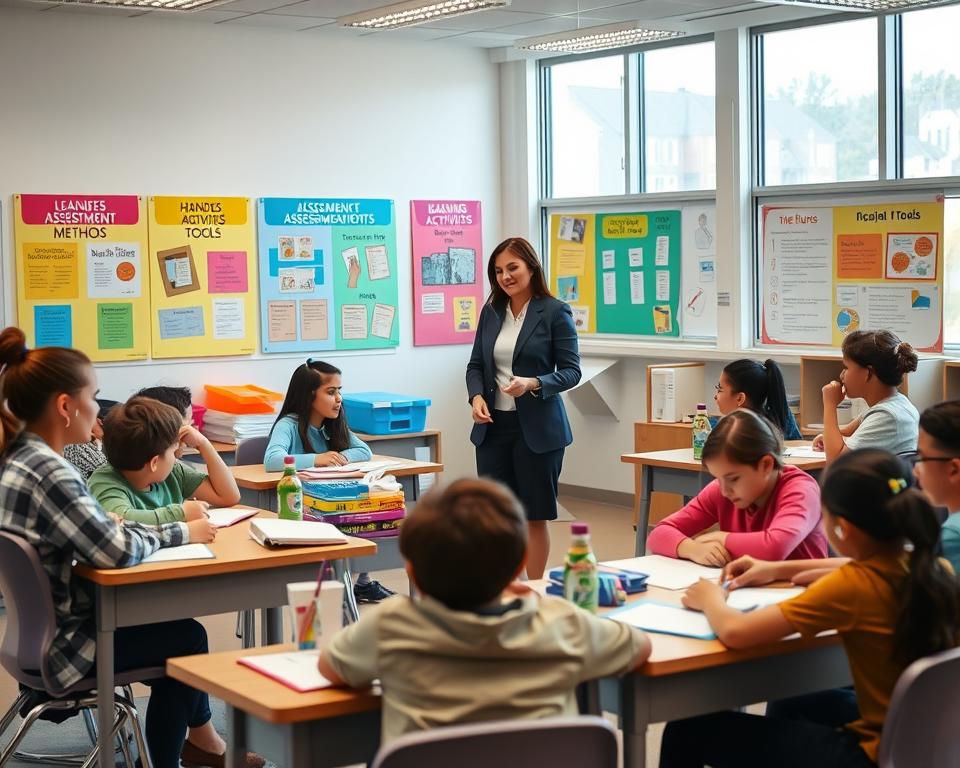
Use clear supports and quick checks so every student can join a fast activity with confidence. Tiered tasks, brief lifelines, and time caps keep pressure low while you gather useful data.
Tier tasks, lifelines, and time limits for all learners
Tier tasks so every learner meets the same goal with varied entry points. You’ll give students lifelines—partner hints or a second try—to keep effort high.
- You’ll set clear time limits that build urgency without rushing comprehension.
- You’ll plan the order of prompts from easier to harder so momentum grows.
- You’ll model a short answer and then have peers verify with a compare-and-correct move.
- You’ll make sure supports are visible and rotate roles so each student contributes.
Formative checks: thumbs, whiteboards, and peer-verify
Embed quick questions using Flip-It whiteboards, Back-to-Back reveals, or thumbs checks for instant feedback. Peer-verify boosts accuracy and helps you spot misconceptions fast.
“Lifelines and time caps reduce pressure while preserving enthusiasm.”
Quick tips: log a few data points each round, circulate with targeted tips, set safety norms for movement, and end with a micro-reflection on what worked and what to try next.
Conclusion
Finish by building a tiny kit of routines you can pull out on any tight schedule. Keep a short list of go-to activities and games that match your class goals. Pick two indoor and two outdoor options so you can shift the moment without fuss.
Rotate simple roles and a quick reward to keep students engaged and ready to try again. Pack cards, markers, a hoop, a rubber band with strings, and a timer in one box so you can run a rapid round this week.
Try it: invite kids to lead a round, track results, and name one word that shows growth. You’ll give students ownership, gather fast evidence of learning, and keep the group connected day after day.